


Chengdu Rice Field Trial
Chengdu Rice Field Trial
Rice Yield, Fertilizer Pairing, and Chemical Fertilizer Reduction with Rolling Greens RichFarm
2018 | Chengdu, Sichuan, China | Rice Field Trial
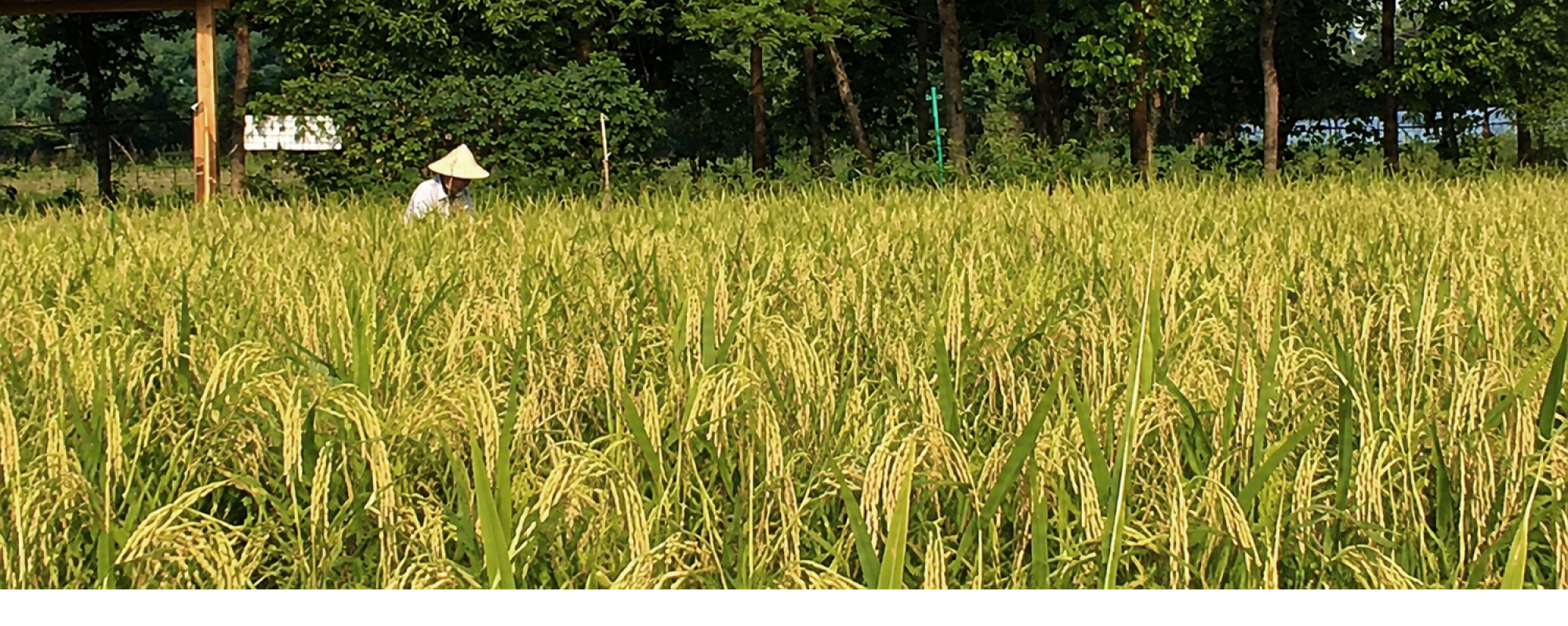
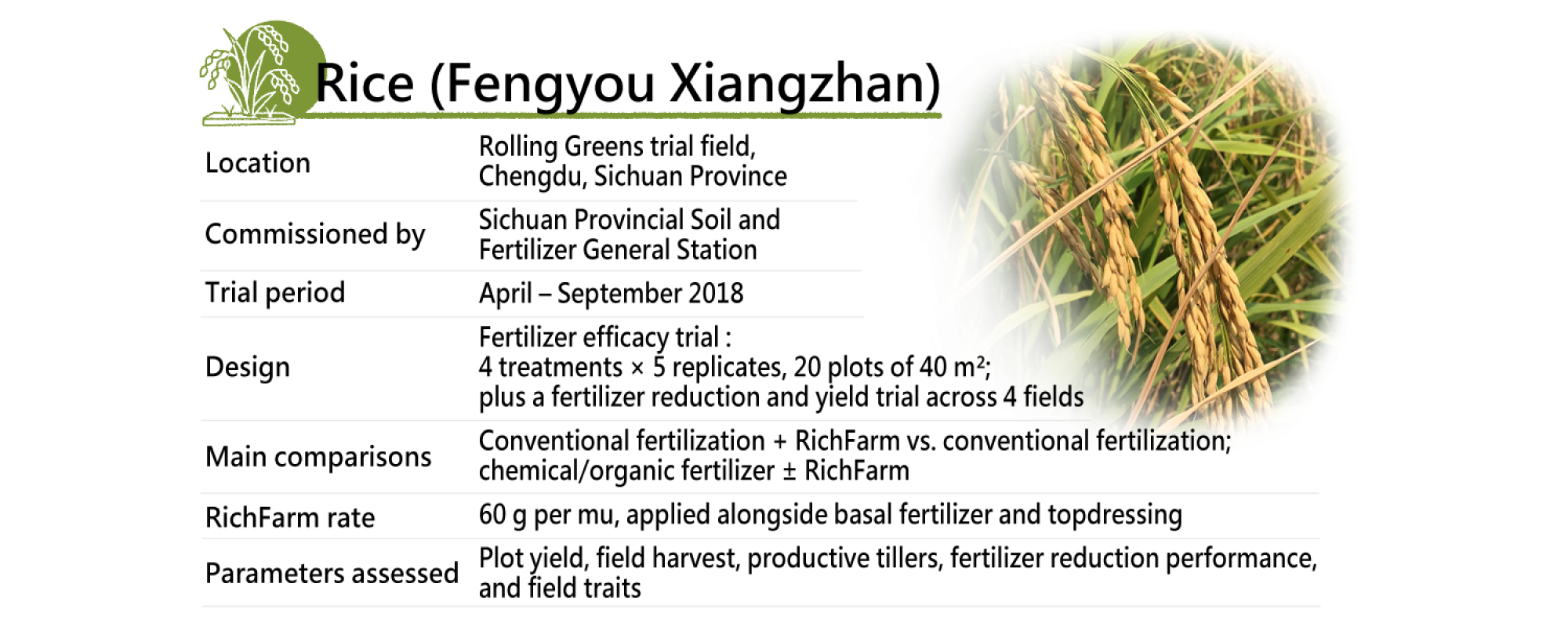


In 2018, Rolling Greens was commissioned by the Sichuan Provincial Soil and Fertilizer General Station to conduct a rice field trial at its Chengdu trial field, evaluating the performance of its microbial product RichFarm in rice cultivation.
The trial began with land preparation and basal fertilization in April 2018, followed by transplanting in late April to early May and harvest in early September, covering one full growing season.
The trial had two parts. The first was a formal fertilizer efficacy trial: in addition to comparing RichFarm with conventional fertilization, it included a sterilized RichFarm treatment to isolate the effect of live microorganisms, plus an unfertilized blank control as a baseline. The second was a fertilizer reduction and yield trial comparing harvests across four fields with chemical or organic fertilizer, with and without RichFarm.
Fertilization, irrigation, and other field management practices were kept consistent across plots throughout the trial.

Fertilizer Efficacy Trial
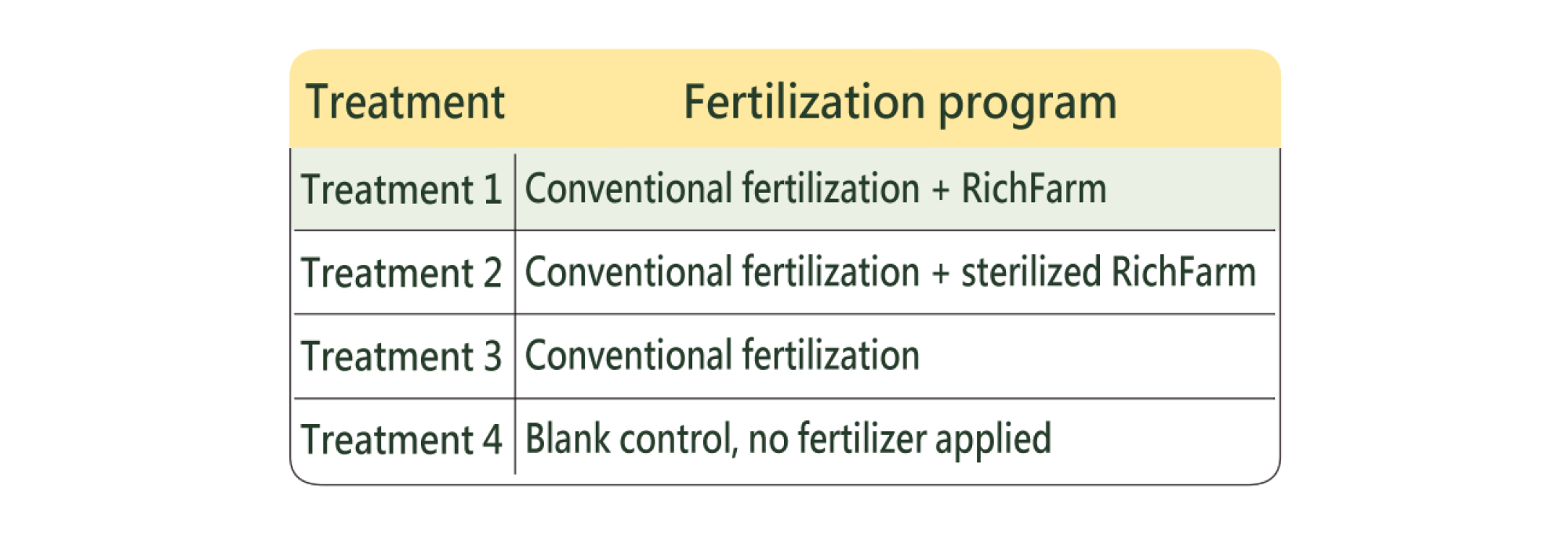
Conventional fertilization applied 35 kg/mu of chemical fertilizer at both basal and tillering stages; RichFarm was applied alongside basal fertilizer and topdressing at 60 g per mu. The sterilized RichFarm treatment matched the RichFarm treatment in method, timing, and rate; the only difference was that the product had been sterilized.
Fertilizer Reduction and Yield Trial
Field-level comparisons were also carried out across four fields, Nos. 1, 3, 4, and 6: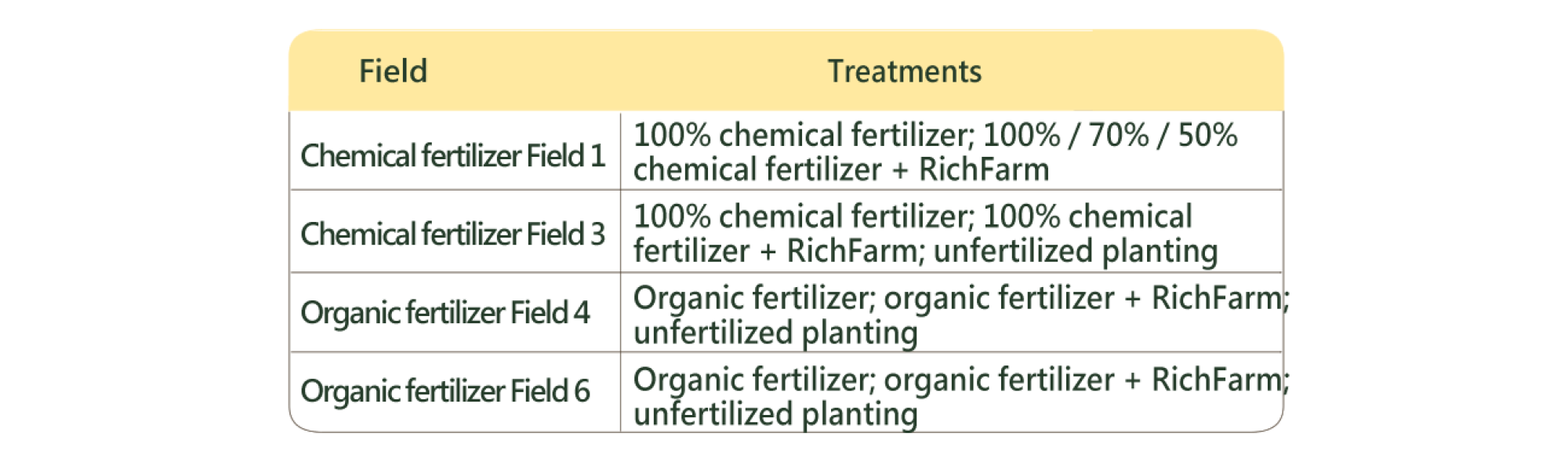
100% chemical fertilizer consisted of 35 kg/mu at both basal fertilization and topdressing; organic fertilizer consisted of 1 tonne/mu of fast-acting organic fertilizer at both basal fertilization and topdressing; RichFarm was applied at 60 g per mu. Unfertilized planting served as a no-fertilizer planting baseline, and an unplanted bare plot was also maintained.

1. Field trait observations
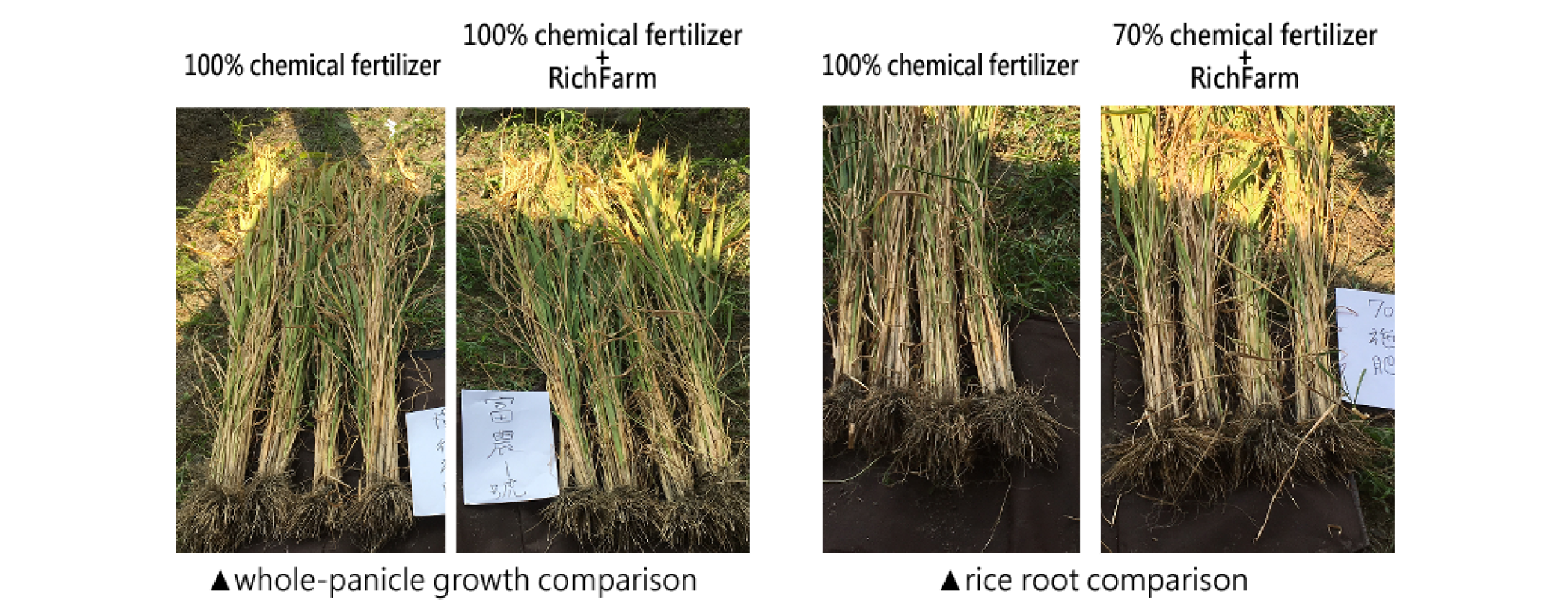
Field observation records show that in plots treated with RichFarm, rice plants were taller, leaves were noticeably greener with less leaf drying, and root systems were longer, denser, and more widely spread.
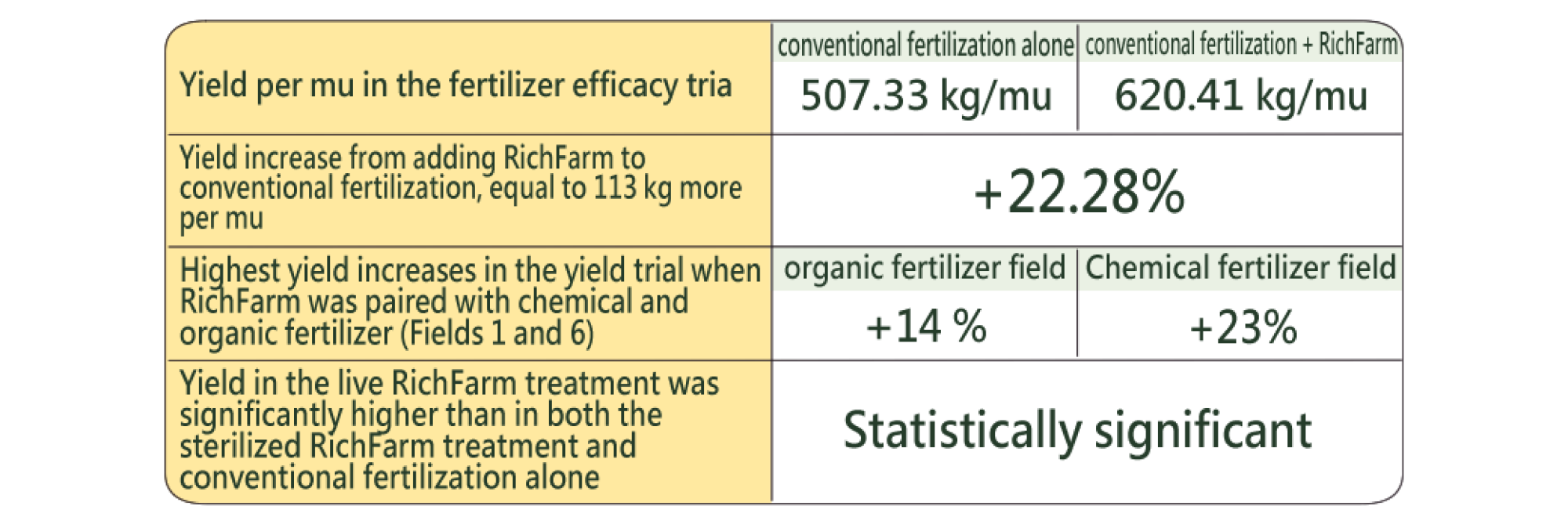
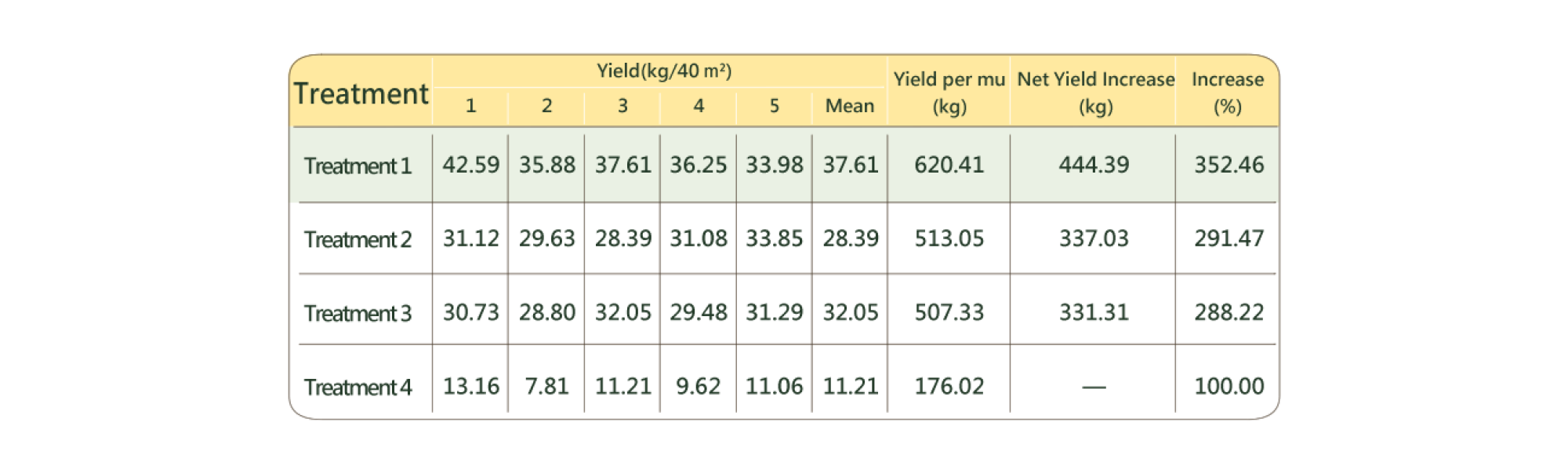
2. Fertilizer efficacy trial: 113 kg more per mu with conventional fertilization
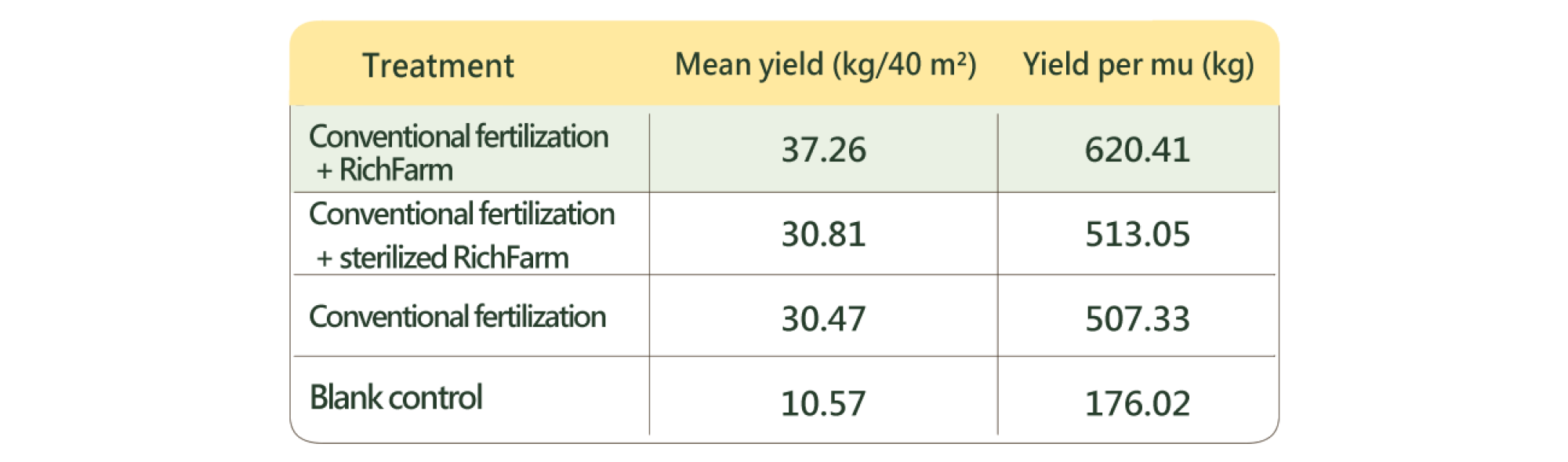
3. Live RichFarm significantly different from other treatments
The original trial included a statistical comparison. Multiple comparison results show that yield in the live RichFarm treatment was significantly higher than in both the sterilized RichFarm treatment and conventional fertilization alone, while no significant difference was found between the sterilized RichFarm treatment and conventional fertilization alone.
This is consistent with observations from the 2017–2018 Nantou white sugarcane trial: the sterilized product did not reproduce the yield increase of the live treatment, pointing to the role of live microorganisms.
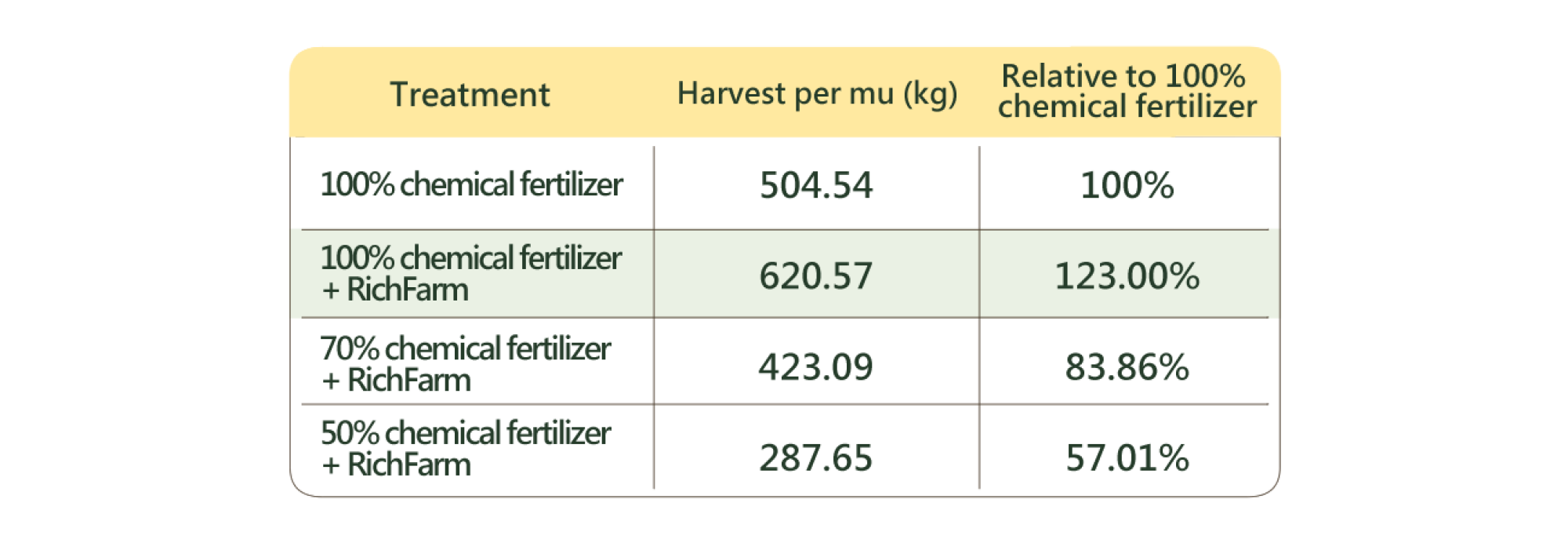
4. Chemical fertilizer fields: Field 1 +23%, Field 3 +20%
In the field-level comparison on chemical fertilizer fields, 100% chemical fertilizer with RichFarm produced a higher harvest per mu than 100% chemical fertilizer alone:
Field 1 gained 116 kg per mu, the largest increase among all fields in this trial. Field 3 also included an unfertilized planting baseline (178.05 kg/mu); 100% chemical fertilizer and 100% chemical fertilizer + RichFarm reached 247.81% and 295.44% of that baseline, respectively.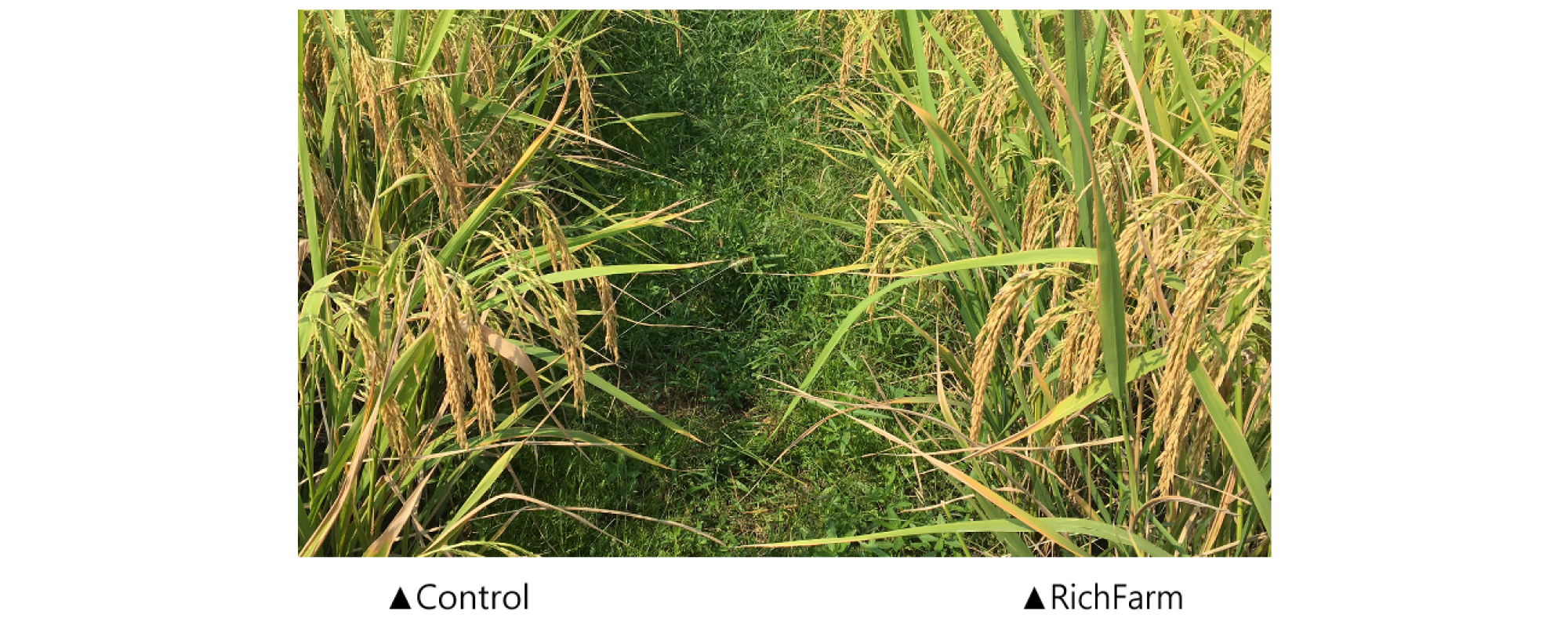
5. Fertilizer reduction: 70% chemical fertilizer maintained about 84% of harvest
6. Organic fertilizer fields: +12.4% and +14%
In the field-level comparison on organic fertilizer fields, organic fertilizer with RichFarm likewise produced a higher harvest per mu than organic fertilizer alone:
Field 6 gained 61 kg per mu. Both fields also included unfertilized planting baselines, with harvests of 177.65 and 169.11 kg/mu, respectively.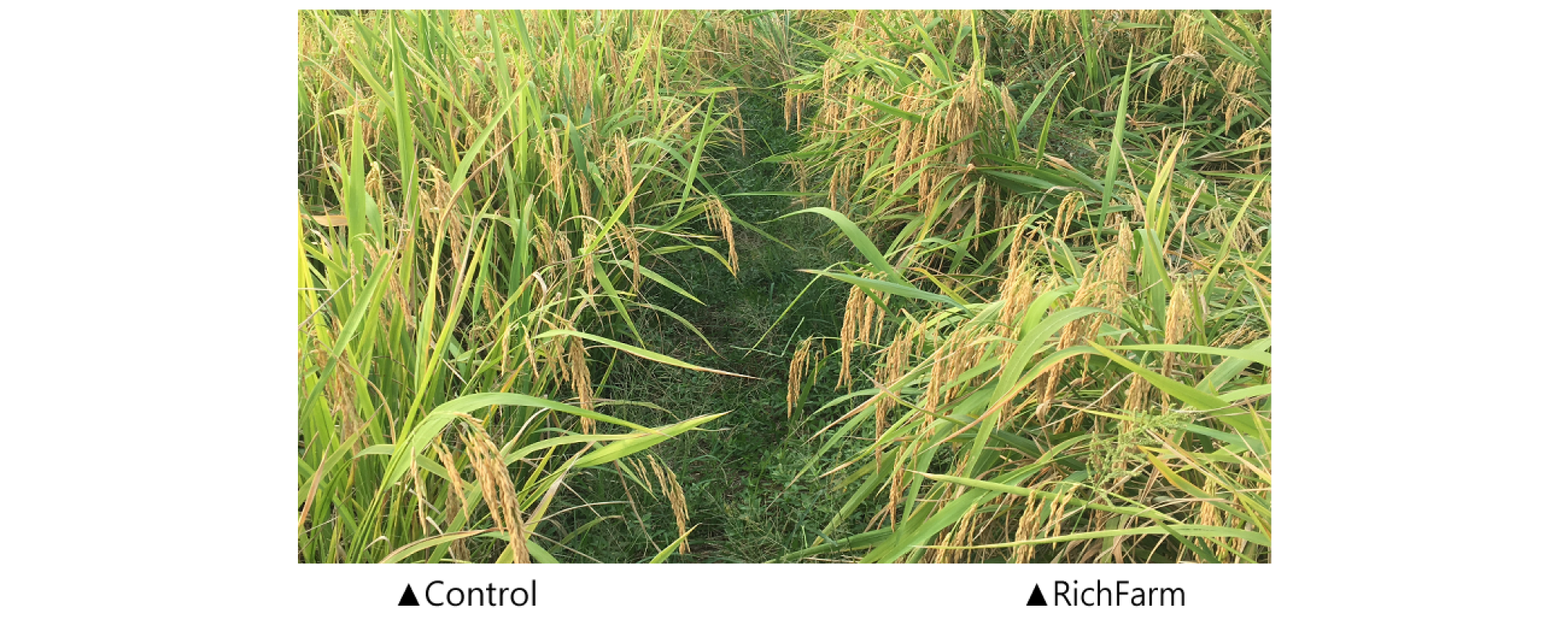
7. Higher productive tiller rate
Tillers are the secondary shoots that grow from the base of the rice stem; those that produce filled panicles are productive tillers, which are directly linked to harvest yield. Tiller counts in the original slides show that treatments with RichFarm had higher productive tiller rates than their respective controls: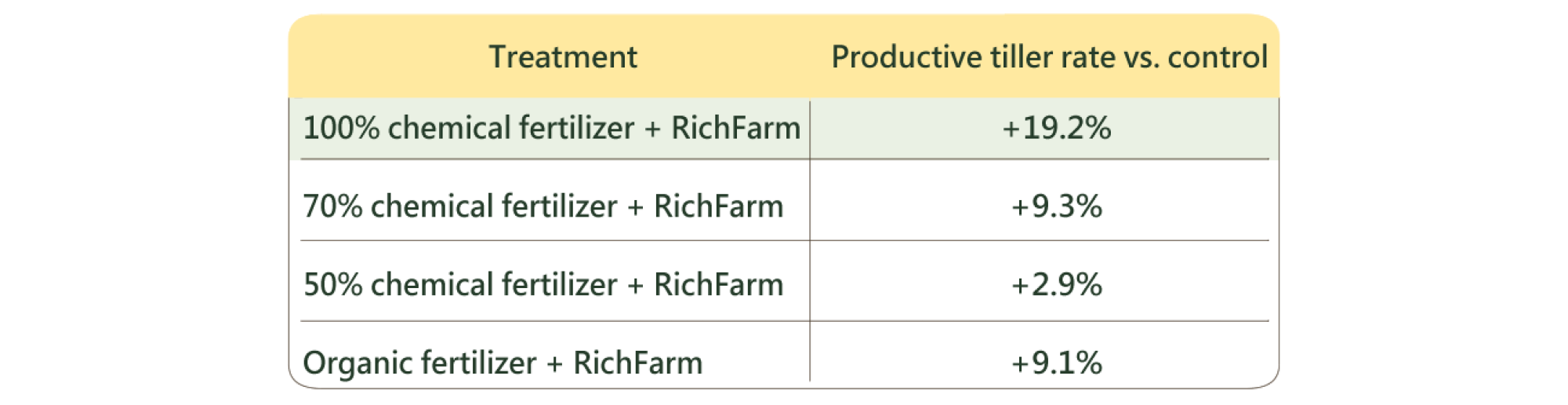
Tillering followed the same direction as harvest: treatments with larger yield increases also showed greater gains in productive tiller rate.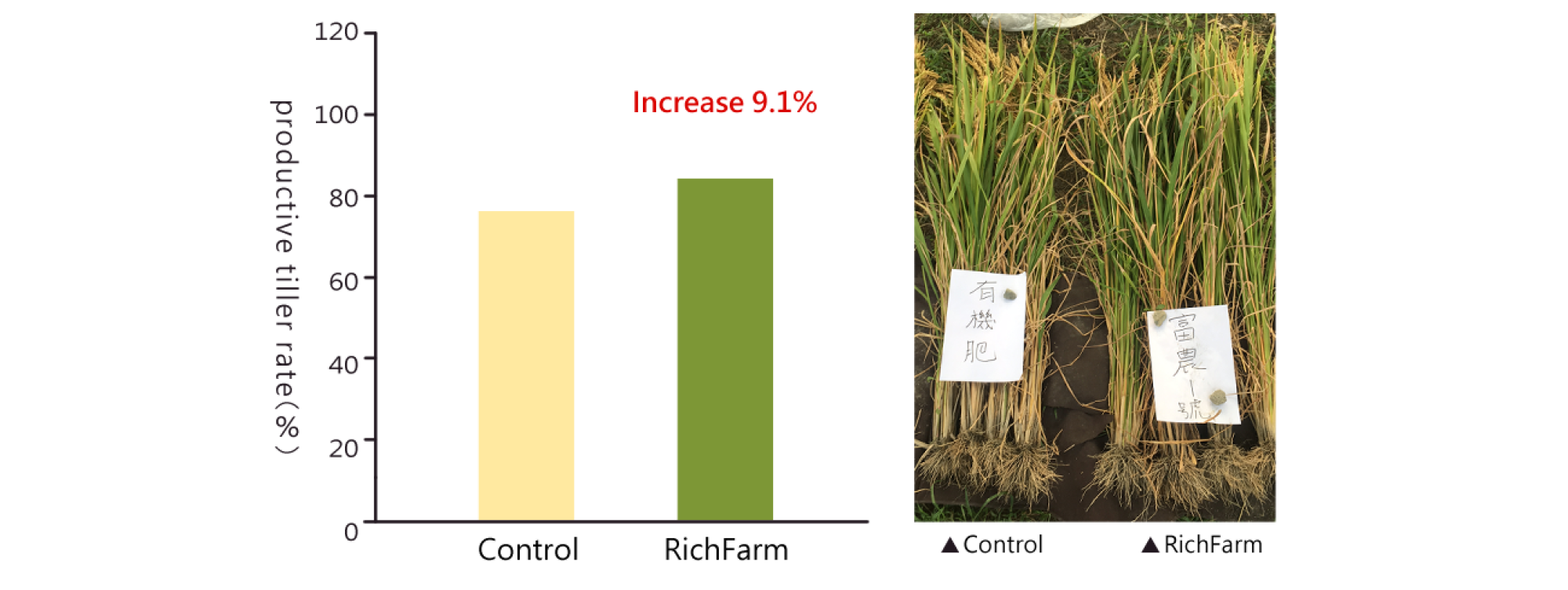

This Chengdu rice trial combined a formal plot-level fertilizer efficacy trial with field-level fertilizer reduction and yield comparisons, and both showed results in a consistent direction.
In the fertilizer efficacy trial, conventional fertilization with RichFarm yielded 22.28% more per mu than conventional fertilization alone, a statistically significant difference. No significant difference was found between the sterilized RichFarm treatment and conventional fertilization alone, indicating that the yield increase is linked to live microorganisms rather than other components of the product.
At the field level, yield increases from pairing RichFarm with chemical or organic fertilizer ranged from 12.4% to 23%, a range similar to the 22.28% in the plot trial, and gains in productive tiller rate moved in the same direction as harvest.
On fertilizer reduction, a 30% reduction combined with RichFarm maintained about 84% of harvest. Under the conditions of this trial, this result reflects potential for improved fertilizer use rather than maintaining the original yield after reduction.
Overall, the results support the potential of RichFarm as a microbial supplement within existing chemical or organic fertilization programs to improve rice yield.

This page was compiled from the original 2018 Chengdu field records and fertilizer efficacy trial report. Results should be read with the following conditions in mind:
• The fertilizer efficacy trial used 4 treatments with 5 replicates, for a total of 20 plots of 40 m². The fertilizer reduction and yield trial was a field-level comparison without replicate plots; the two data types should not be converted into one another.
• In all RichFarm groups, the microbial product was added on top of an existing chemical or organic fertilization program. Results should be read as the effect of RichFarm combined with existing fertilization, not as RichFarm replacing fertilizer.
• The original report’s statement that “70% chemical fertilizer + RichFarm increased harvest by 4.1% relative to chemical fertilizer input” is an estimated indicator whose calculation basis was not specified. Based on actual harvest per mu, 70% chemical fertilizer + RichFarm reached 83.86% of 100% chemical fertilizer; this page presents the measured data.
• The original slides’ estimates of additional income per mu (CNY 583 for the chemical fertilizer field, CNY 310 for the organic fertilizer field) were calculated at a Chengdu fragrant rice purchase price of CNY 2.5 per jin (500 g). These are economic estimates and are not presented on this page as primary trial results.
• Yields per mu expressed in jin in the original slides (1,008 and 1,241 jin) correspond to 504.54 and 620.57 kg/mu in chemical fertilizer Field 1.
• Field traits such as leaf color and root systems, as well as productive tiller rates, come from charts in the original slides and on-site observation records.
• The results on this page reflect trial performance during a single 2018 growing season in Chengdu under local soil, climate, and management conditions.

Rolling Greens works with growers, agribusinesses, and research partners to design field trials for different crops, climates, and fertilization systems, evaluating RichFarm’s performance under real production conditions.
Related articles
NOTICE
Nanao Rice Field Observation, Yilan
Observations of the RichFarm group in plant height, heading, and harvest performance
NOTICE
Puli Passion Fruit Field Trial
Yield and Fruit Quality of Passion Fruit Treated with Rolling Greens RichFarm
NOTICE
Nantou White Sugarcane Field Trial
Growth, Quality, and Yield of White Sugarcane Treated with Rolling Greens RichFarm