


Puli Passion Fruit Field Trial
Puli Passion Fruit Field Trial
Yield and Fruit Quality of Passion Fruit Treated with Rolling Greens RichFarm
2018–2019 | Dapingding, Puli, Nantou, Taiwan | Passion Fruit Commercial Field Trial
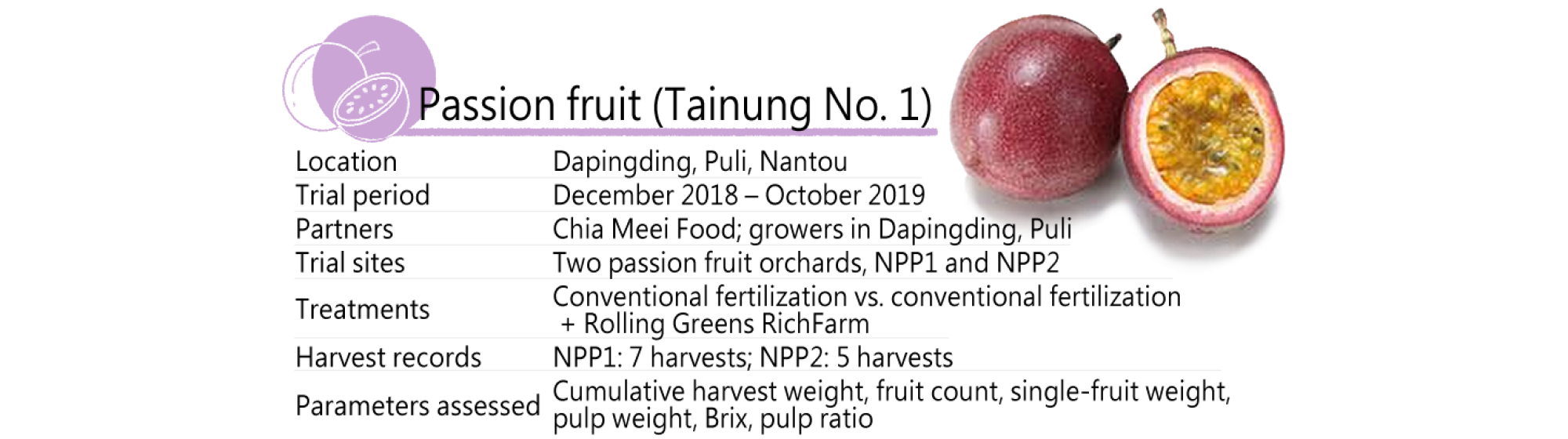


In late 2018, Rolling Greens began a passion fruit field collaboration with Chia Meei Food to evaluate whether adding Rolling Greens RichFarm Booster could improve passion fruit yield and fruit quality without changing the growers’ existing conventional fertilization program.
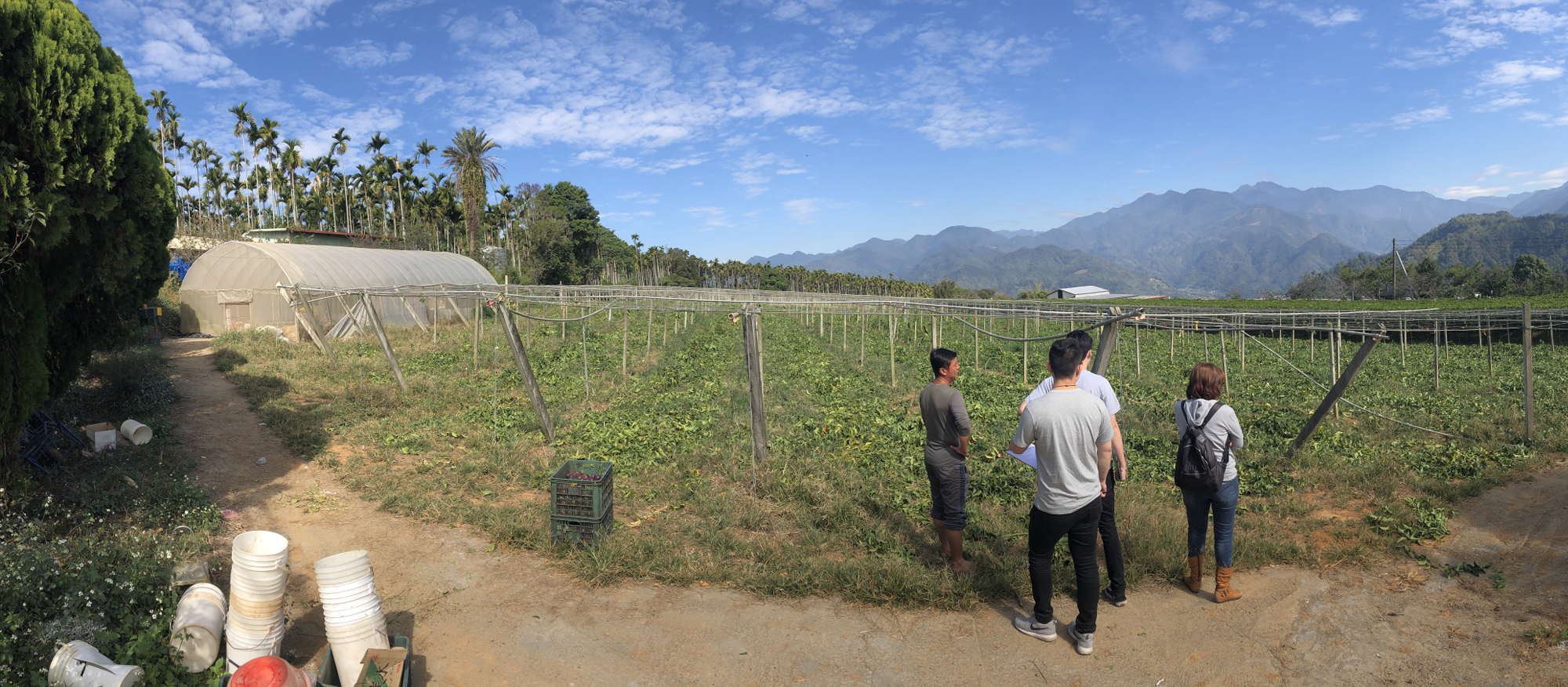
The trial site was in Dapingding, Puli, Nantou, with Tainung No. 1 passion fruit. The site and growers were selected by the partner, and day-to-day cultivation followed the growers’ existing management practices, while Rolling Greens supplied the product and supported field records and sampling.


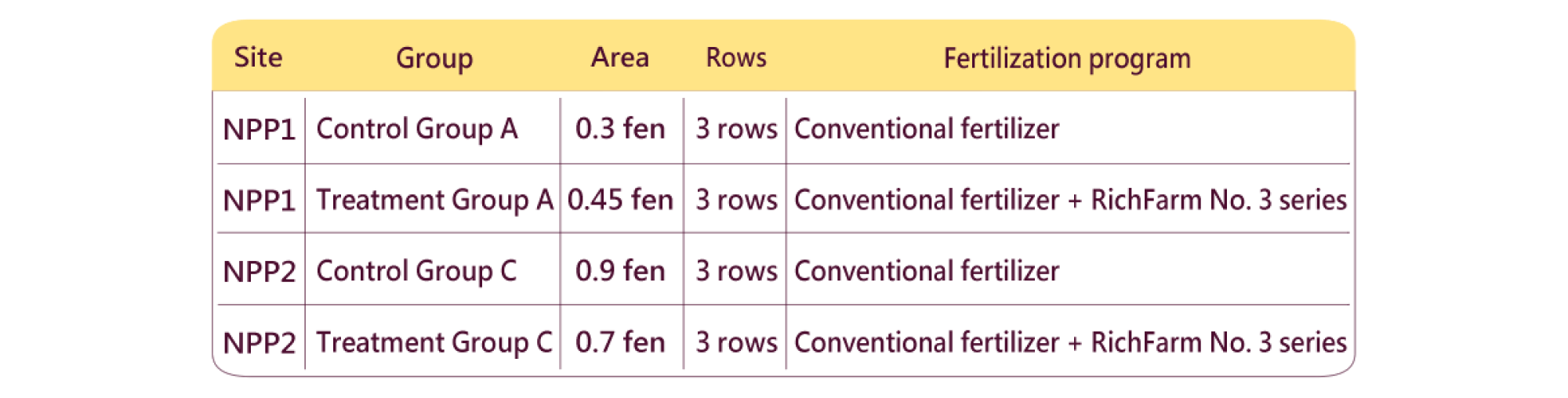
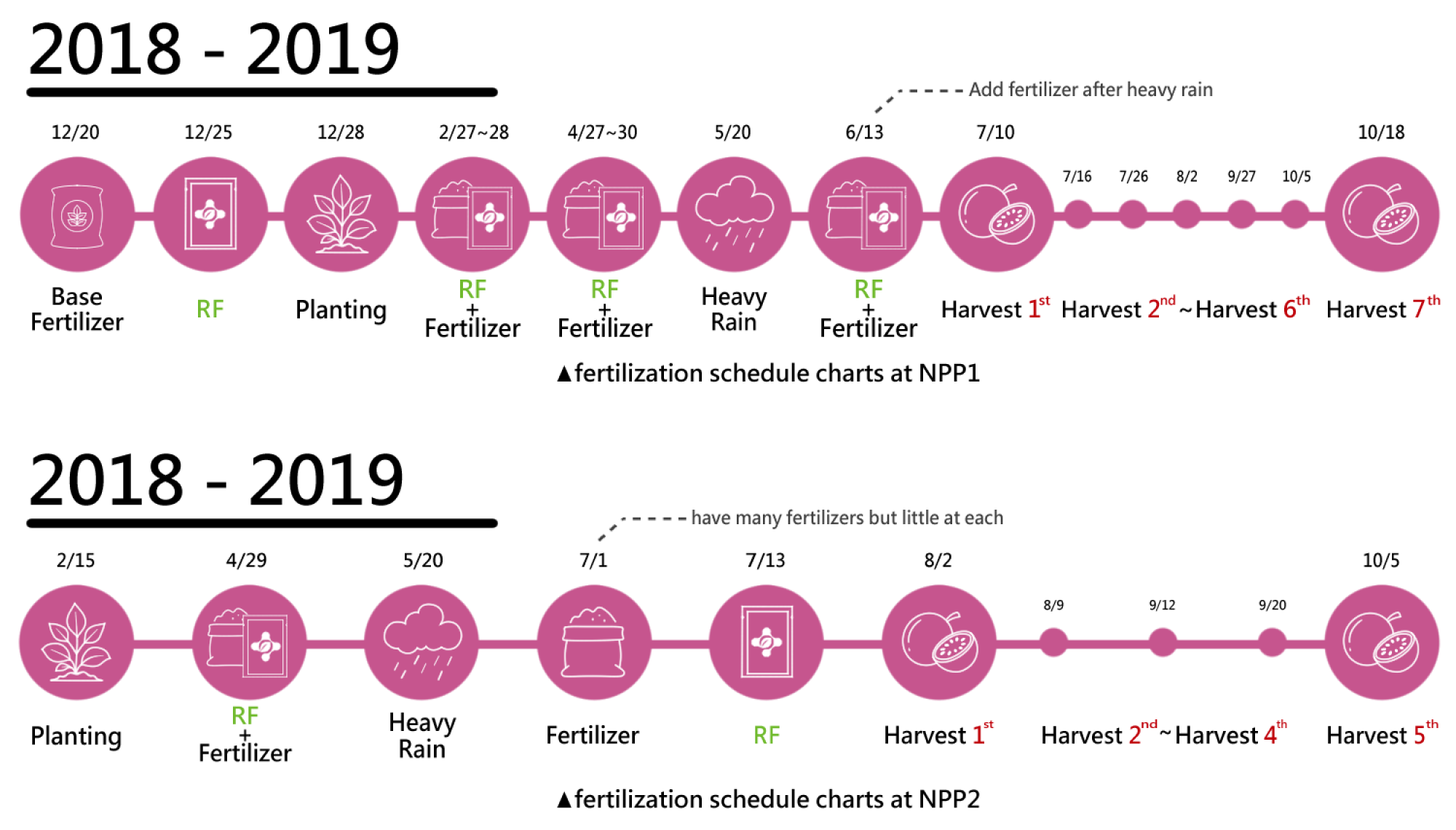
The trial was carried out in two passion fruit orchards, NPP1 and NPP2. Each orchard had a control area without RichFarm and a treatment area with Rolling Greens RichFarm Booster.
NPP1 had 7 harvest records and NPP2 had 5. Harvests were documented with photos and video, and random samples were taken to measure fruit sweetness, pulp weight, and single-fruit weight.

1. Cumulative harvest weight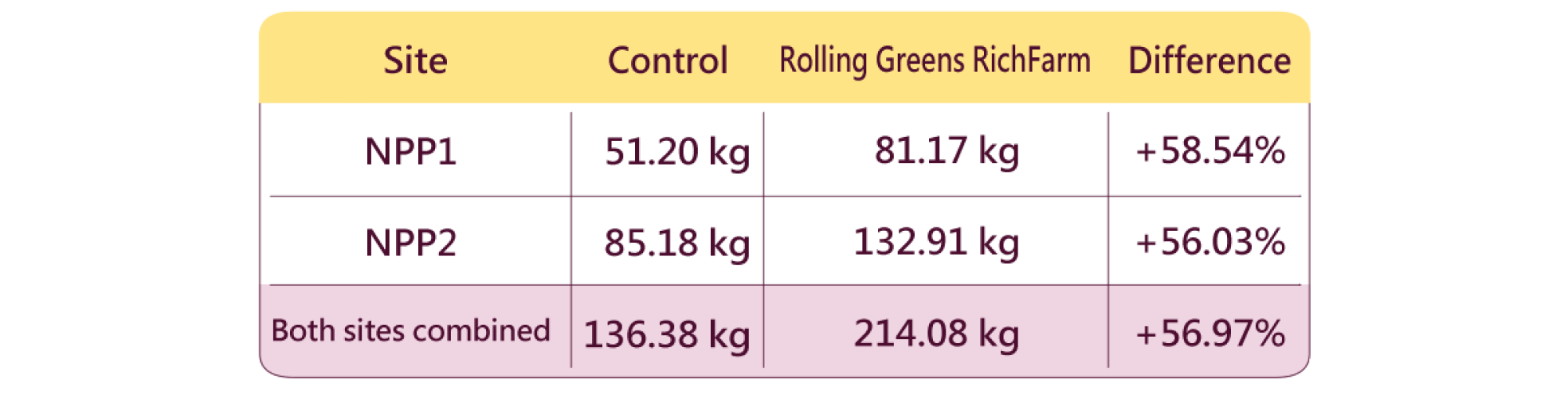
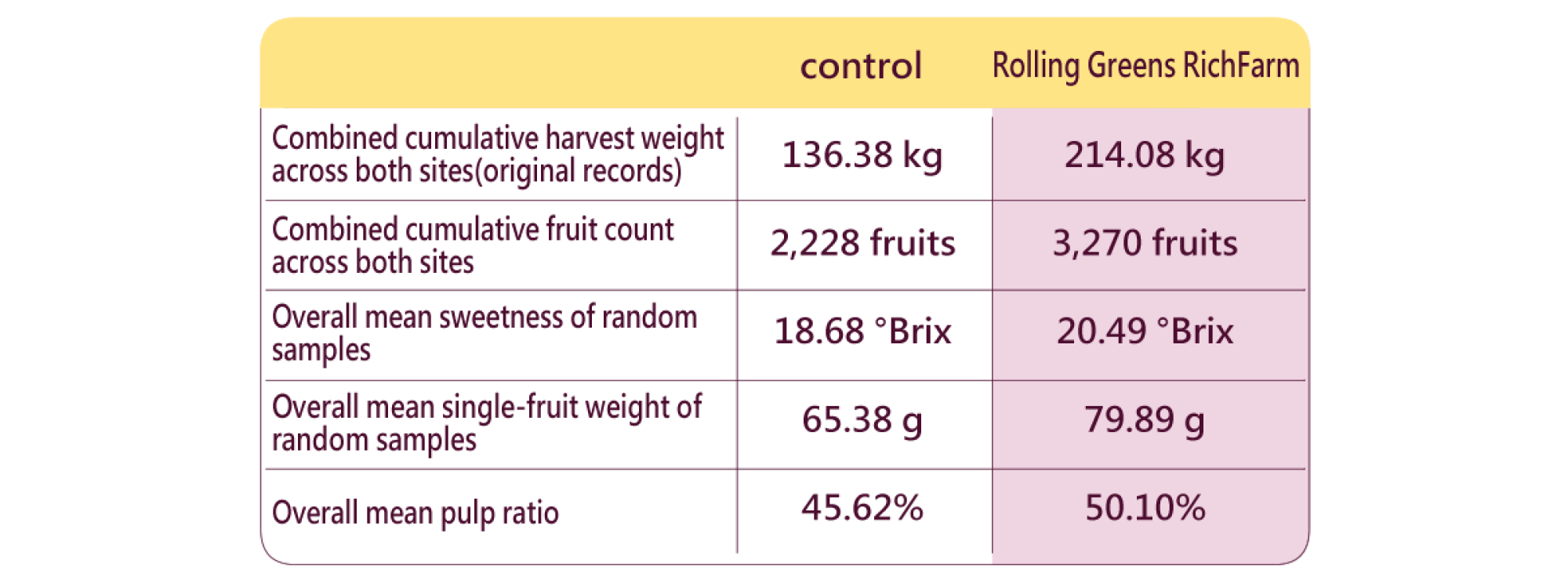
The table above shows the actual total harvest of each area. The areas of the groups were not equal; see Trial Notes for the relevant conditions.
2. Cumulative fruit count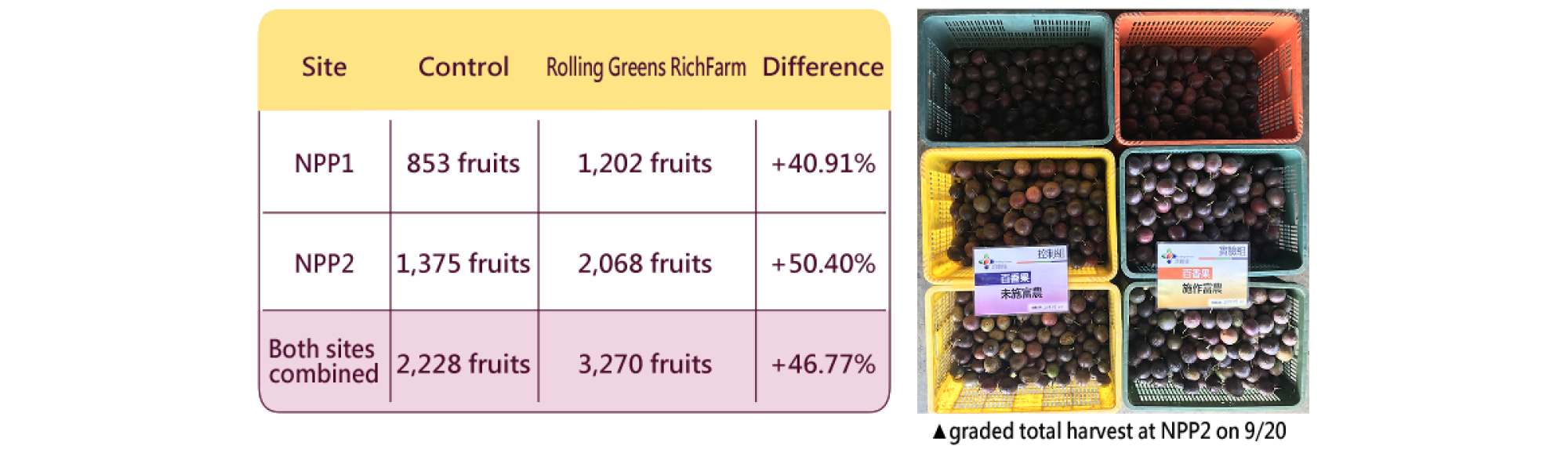
3. Sweetness, pulp weight, and single-fruit weight
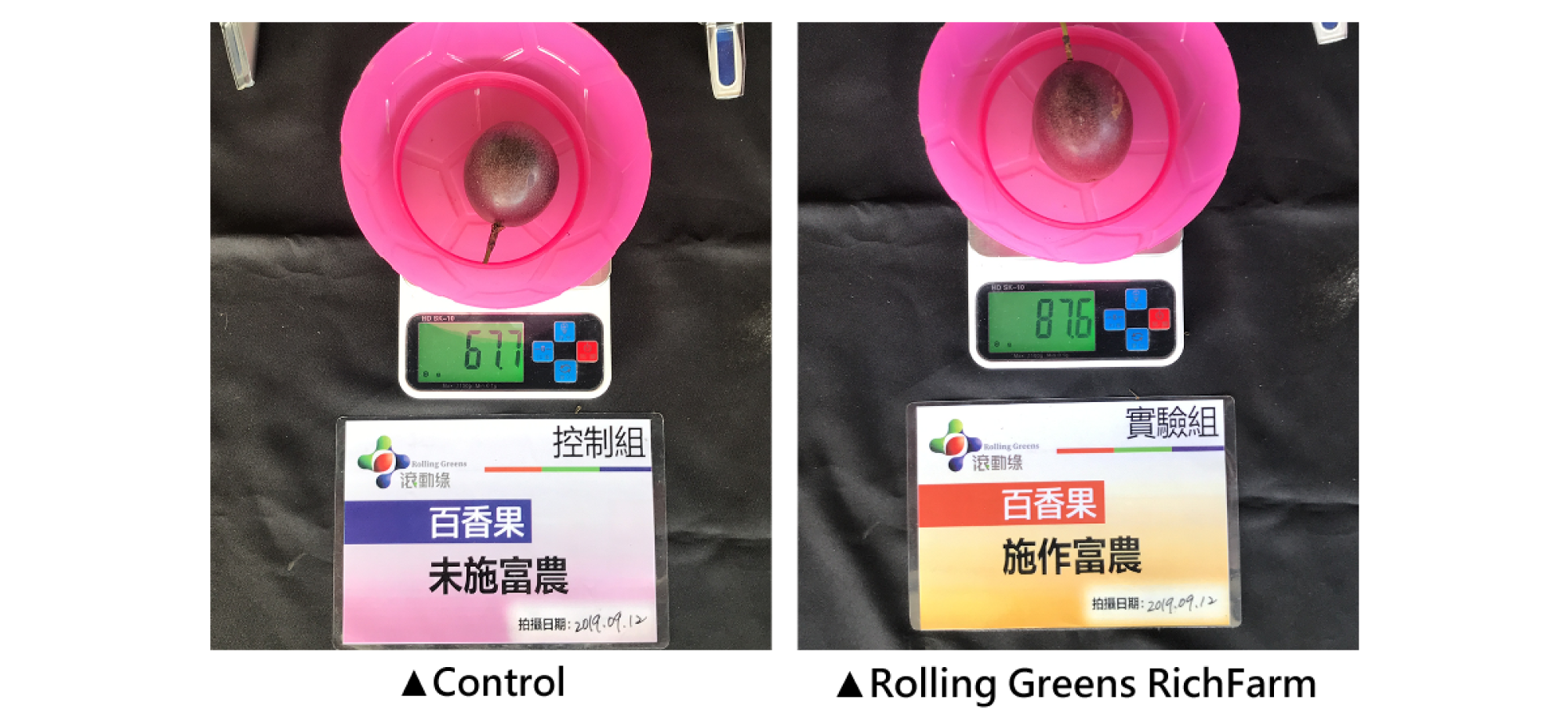
Random sampling at both sites pointed in the same direction: mean sweetness, pulp weight, and single-fruit weight were all higher in the Rolling Greens RichFarm group than in the control.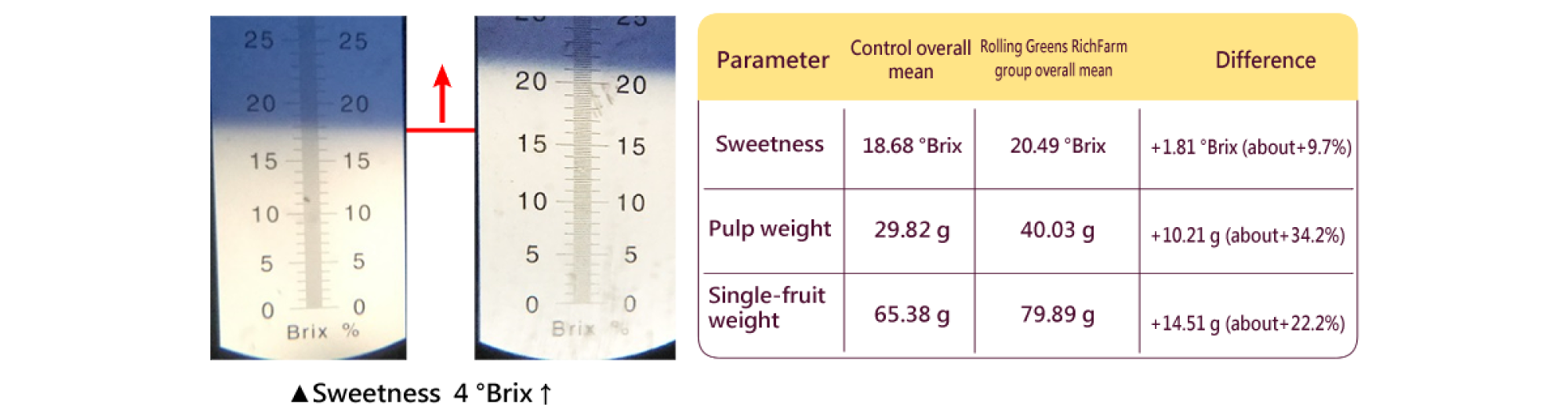
4. Higher pulp ratio
The overall mean pulp ratio per fruit rose from 45.62% in the control to 50.10% in the Rolling Greens RichFarm group, an increase of 4.48 percentage points; correspondingly, the rind ratio fell from 54.38% to 49.90%.
For passion fruit destined mainly for juice and processing, pulp ratio is a more direct indicator of processing value than fruit weight alone.
Across this field trial of nearly one year, both passion fruit orchards showed results in the same direction: after adding Rolling Greens RichFarm Booster, cumulative harvest weight and fruit count increased, and the sweetness, pulp weight, and single-fruit weight of random samples rose as well.
The pulp ratio rose from 45.62% to 50.10%, meaning the improvement appeared not only in fruit appearance or total weight but also in the proportion of usable pulp. For both fresh fruit and processing, this change carries direct product quality and processing value.
This trial therefore supports the Rolling Greens RichFarm series as a microbial supplement within an existing fertilization program, and indicates that its effect on passion fruit yield and fruit quality merits further commercial validation.

This page is a faithful compilation of the original 2018–2019 field records. The data should be read with the following conditions in mind:
• The control and treatment areas at NPP1 and NPP2 differ in size. The cumulative weights and fruit counts in the original report are the actual total harvest of each area and are not equivalent to standardized yield per unit area
• The two sites had different numbers of harvests (7 at NPP1, 5 at NPP2); this page follows the cumulative records of the original report

Rolling Greens works with growers, agribusinesses, and research partners to design field trials for different crops, climates, and fertilization systems, evaluating RichFarm’s performance under real production conditions.
Related articles
NOTICE
Nanao Rice Field Observation, Yilan
Observations of the RichFarm group in plant height, heading, and harvest performance
NOTICE
Chengdu Rice Field Trial
Rice Yield, Fertilizer Pairing, and Chemical Fertilizer Reduction with Rolling Greens RichFarm

NOTICE
Nantou White Sugarcane Field Trial
Growth, Quality, and Yield of White Sugarcane Treated with Rolling Greens RichFarm