

DATE
Microbes Aren’t Fertilizer—So What Do They Actually Do in the Soil?
From the rhizosphere and nutrient cycling to everyday crop management, here’s how agricultural microbial products fit into a modern growing system.
When we think about crop growth, the first things that usually come to mind are nitrogen, phosphorus, potassium, along with chemical fertilizers, organic fertilizers, and plant nutrients.
But in recent years, another term has become increasingly common in agriculture: agricultural microbial products.
If fertilizer already provides the nutrients plants need, why would growers also use microbes?
The answer lies beneath the surface.
Plant growth is not simply a matter of how many nutrients are present in the soil. It also depends on what form those nutrients are in, what conditions exist around the roots, and how biological activity in the soil participates in nutrient cycling.
So the first step in understanding microbial products is to separate the role of microbes from the role of fertilizer.
Fertilizer Supplies Nutrients. Microbes Focus on the Root-Zone Environment.
One simple way to think about it is to imagine a plant as a factory.
Fertilizer is like the raw material delivered to the factory, supplying nitrogen, phosphorus, potassium, and other nutrients needed for plant growth.
Soil microbes, on the other hand, are more like the workers involved in the surrounding transport, transformation, and recycling systems.
They are not the same thing.
Fertilizer primarily supplies nutrients to plants, while agricultural microbial products are mainly used to support the management of soil, the rhizosphere, and the surrounding microbial environment.
In most cases, microbial products are not intended to directly replace fertilizer. Instead, they become one part of a broader fertility and soil-management program.
That is why using microbes and applying fertilizer do not have to be an either-or decision.
A more useful question is: How can fertilizer, roots, and the soil environment work together more effectively?
Roots Do Not Live Alone
If we zoom in on the area surrounding plant roots, we find a highly active zone known as the rhizosphere.
The rhizosphere refers to the soil or growing medium directly influenced by root activity.
Plant roots release a variety of compounds, while large populations of bacteria, fungi, and other microorganisms live around them. Together, plants, roots, nutrients, and microbes form a continuously interacting micro-ecosystem.
Different microorganisms may participate in different biological and chemical processes, including:
- Decomposition of organic matter
- Nutrient cycling in the soil
- Transformation of certain nutrients
- Microbial interactions within the rhizosphere
- Maintenance of the environment surrounding plant roots
However, it is important to remember that not all “beneficial microbes” perform exactly the same functions.
Different species, strains, and product formulations may have different characteristics. Their performance can also be influenced by crop type, soil conditions, temperature, moisture, pH, and fertility practices.
So when selecting a microbial product, it is not enough to simply look for the word “microbe” on the label. It is also important to understand which microorganisms are included, what the product is designed to do, and what type of growing environment it is intended for.
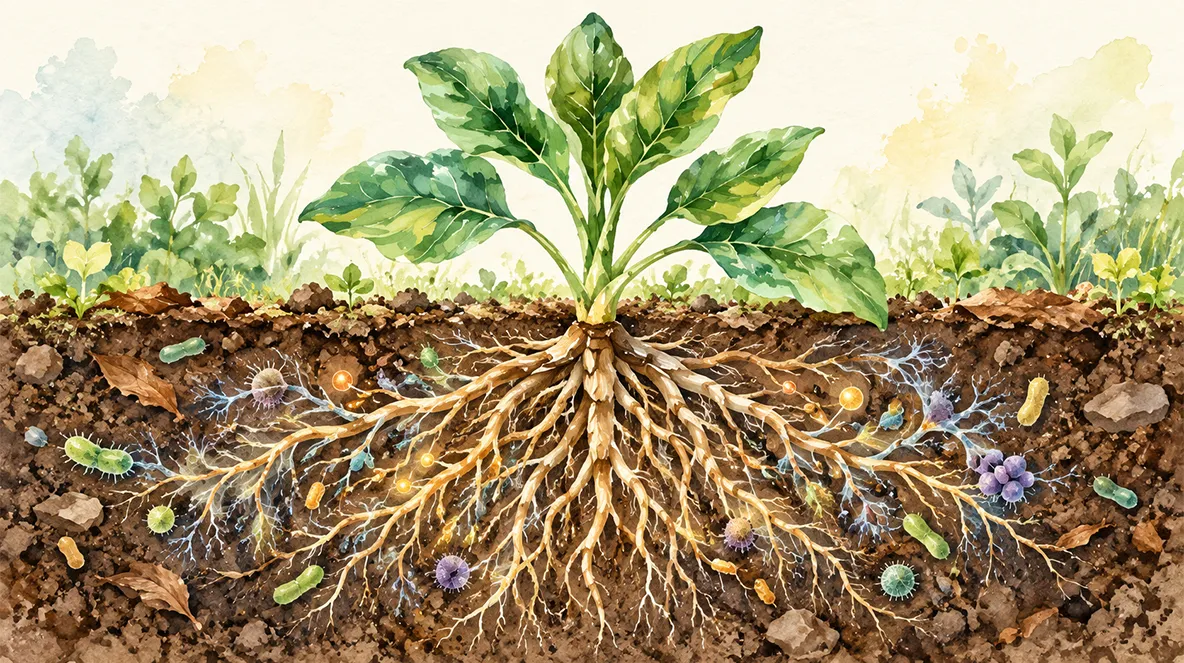
The rhizosphere is an active zone where roots, nutrients, soil, and microorganisms continuously interact.
Can Microbial Products Be Used with Chemical Fertilizers?
One common misunderstanding among growers new to microbial products is:
“If I use microbes, does that mean I can no longer use chemical fertilizer?”
Not at all.
Agricultural microbial products can be incorporated into an existing fertility program and, under appropriate conditions, may be used alongside chemical fertilizers, organic fertilizers, or plant nutrient solutions.
The more important consideration is not whether something is called a “chemical fertilizer,” but rather the actual environment the microorganisms are exposed to.
1. Fertilizer Concentration and Salinity
Excessively high fertilizer concentrations can create high osmotic pressure and saline conditions.
These conditions can affect not only plant roots, but also the survival or activity of certain microorganisms when the environment becomes too extreme.
So even if a microbial product can be used together with fertilizer, that does not automatically mean every product can be mixed at any concentration and left together for an extended period.
2. pH
Different microorganisms have different pH ranges in which they are better able to survive or remain active.
If a mixed solution becomes extremely acidic or alkaline, it may affect the condition of certain microorganisms.
3. Other Ingredients in Fertilizers or Nutrient Solutions
Fertilizers and nutrient solutions used in agriculture often contain more than one ingredient.
If a microbial product is added directly to a fertilizer tank, nutrient reservoir, or irrigation system, growers should consider not only the microbial product instructions, but also the compatibility of the different materials being mixed.
“Can be used with fertilizer” does not necessarily mean “everything can be mixed together in the same tank and left there indefinitely without any effect.”
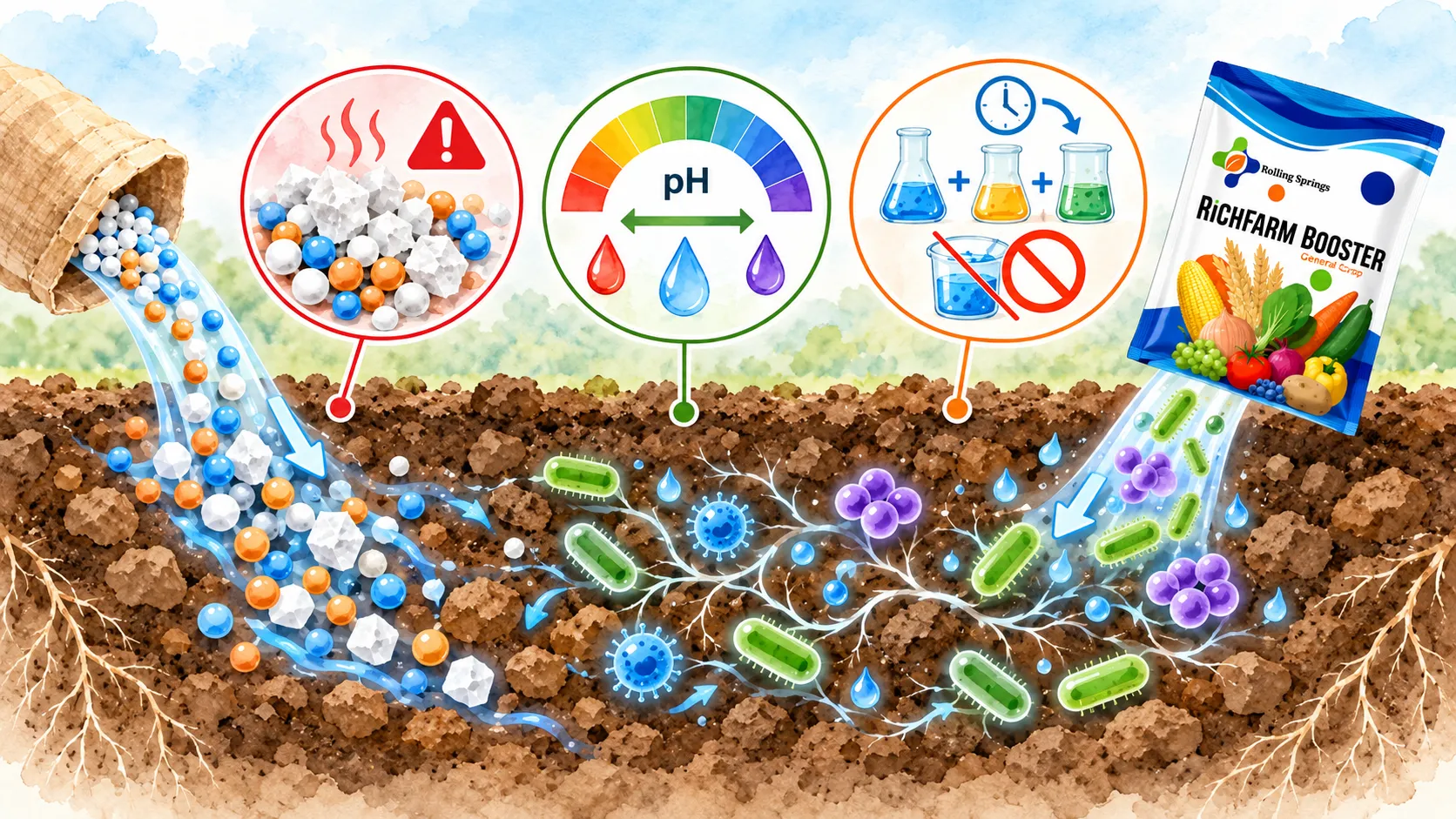
Microbial products can be integrated into an existing fertility program, but concentration, pH, and ingredient compatibility still matter.
The Bigger Question Is Not “Can They Be Used Together?” but “How Should They Be Scheduled?”
Modern crop production rarely relies on a single input.
A complete crop-management program may include:
fertilizers, plant nutrition, microbial products, irrigation management, and crop-protection practices when needed.
So the real question is not whether microbial products can exist on their own, but how they fit into the grower’s existing production schedule.
One important consideration is the timing of pesticide and fungicide applications.
Why Does Timing Matter When Pesticides or Fungicides Are Used?
The reason is straightforward.
The active components in microbial products are living microorganisms or viable microbial units.
Some crop-protection products, particularly those with antimicrobial or fungicidal activity, are specifically designed to affect certain biological organisms.
If the two are applied at the same time, or very close together, certain pesticide or fungicide ingredients may affect the survival or activity of some microorganisms.
But this does not mean: “If pesticides are used, microbial products cannot be used.”
The interaction can vary depending on the pesticide active ingredient, microbial species or strain, application rate, and method of use.
A more practical approach is to view them as management tools with different purposes and use application timing to reduce the chance of interference.
For RichFarm Booster, if chemical pesticides are required during the crop cycle, we recommend applying them at least about one week before or after the RichFarm Booster application.
This allows growers to add microbial management without completely changing an existing crop-protection program. Instead, the goal is to arrange the order and timing of applications so that each management tool can perform its intended role.
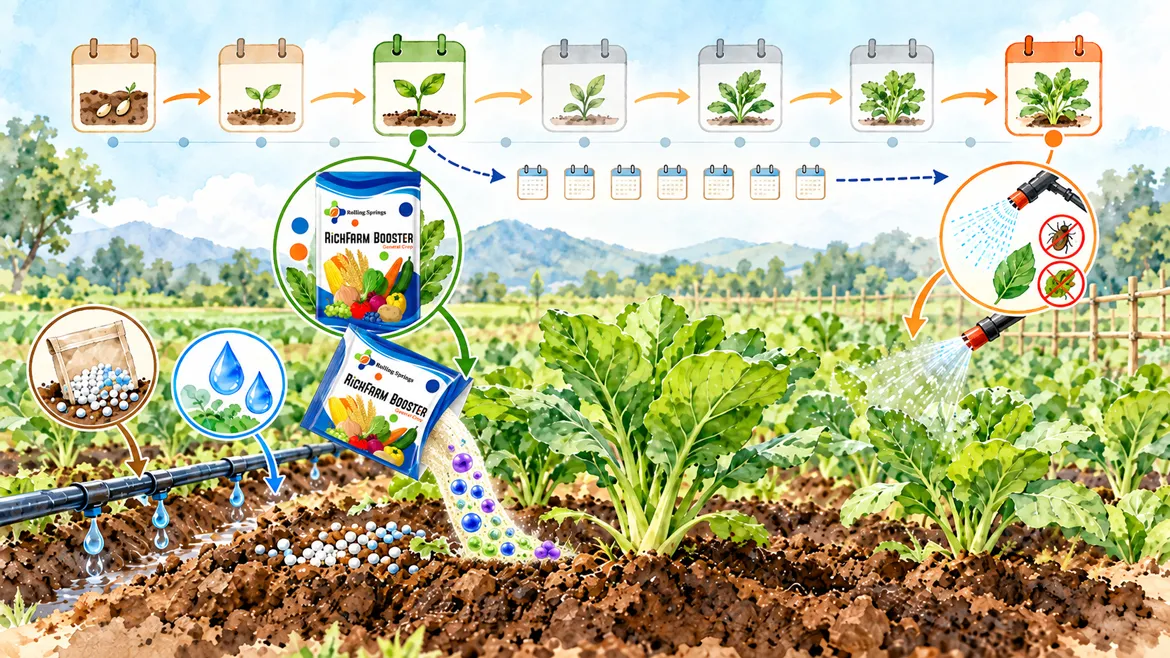
Thoughtful timing between different agricultural inputs can help reduce the risk of unnecessary interference.
The Real Value of Microbial Products Is Not Simply “Adding One More Input”
From fertilizer and irrigation to microbial management and crop protection, modern agriculture is gradually moving from a single-input mindset toward a systems-based approach.
Microbial products should be understood in the same way.
They are not simply another bag or bottle added to a fertilizer program, nor should one product be expected to replace every other agricultural input.
A more useful approach is to begin asking:
What is actually happening around the plant’s roots?
Nutrients may be present in the soil—but are they in forms that can be effectively used?
Are root-zone conditions suitable for root and microbial activity?
Can fertilization, irrigation, microbial management, and crop protection be coordinated more effectively?
Once we move beyond simply asking “How much are we giving the plant?” and begin thinking about how the plant, roots, nutrients, microbes, and soil environment work together, the role of agricultural microbial products becomes much clearer.
Microbes Are Not a Replacement for Fertilizer—They Represent a Different Management Approach
So, returning to the original question:
What is the difference between agricultural microbial products and fertilizer?
Fertilizer supplies nutrients. Microbial products focus on the soil environment, nutrient cycling, and the rhizosphere.
Their roles are different, but they can be part of the same crop-management system.
And the outcome depends on more than simply whether microbes are used. It may also be influenced by the microbial species and strains, product formulation, fertility management, moisture, pH, soil or growing-medium conditions, and the timing of other agricultural inputs.
Understanding these differences helps move microbes beyond being just another word on a product label and gives them a clearer place within an overall crop-management strategy.
Want to Learn More About Using Agricultural Microbes?
Learn more about microbial counts, different growing systems, and how microbial products can be integrated with fertilizer and everyday crop-management practices.
Explore Our FAQ