

DATE
How Microbes Can Help Crops Recover After Flooding
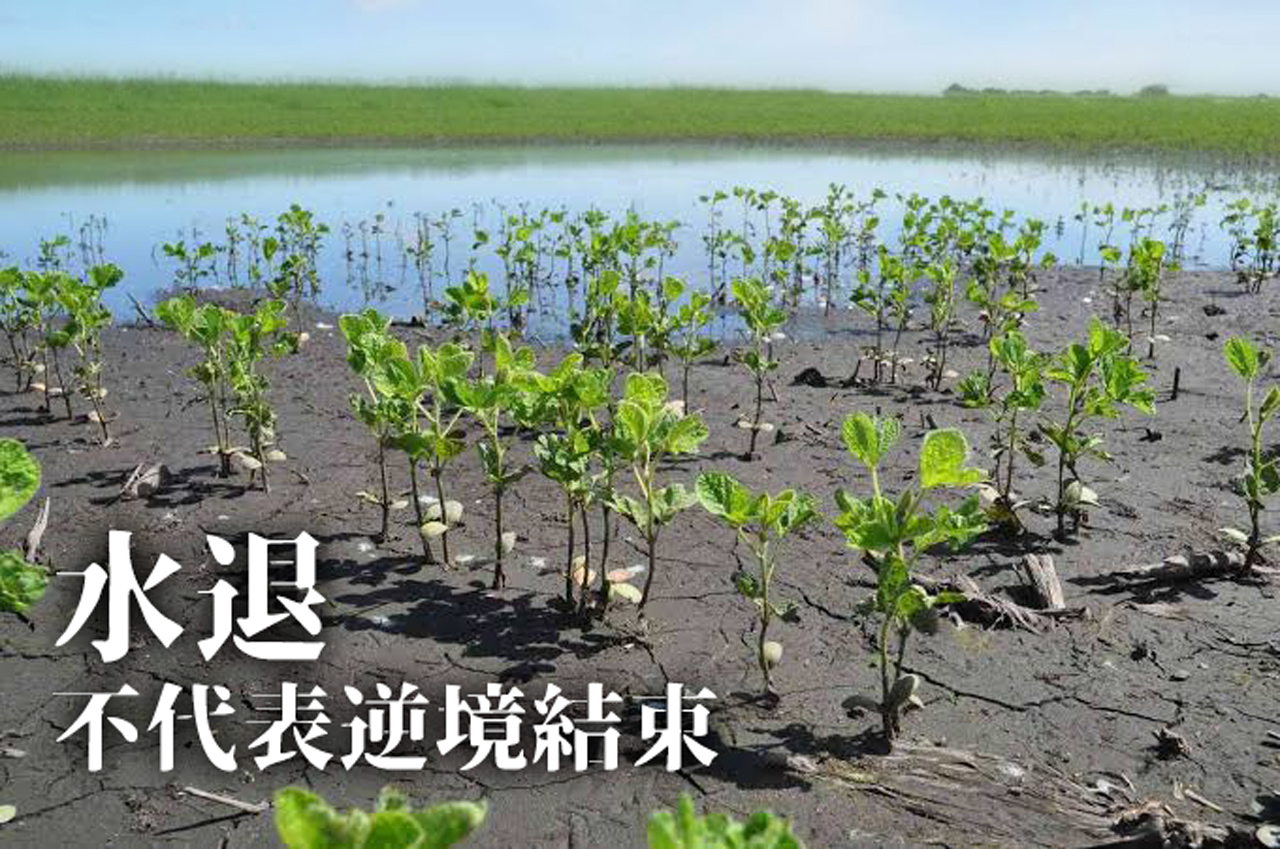
When the Water Recedes, the Stress Isn’t Over
From prolonged flooding and root-zone hypoxia to sudden heat and intense sunlight: how microbes can help crops build stronger post-stress recovery
In the field, the problems caused by heavy rainfall often extend far beyond the days when the rain is actually falling.
What really damages crops is often a rapid sequence of dramatic environmental changes:
Prolonged waterlogging → root-zone hypoxia → reduced root activity → water recedes → oxygen returns to the root zone → heat and intense sunlight return → the plant must quickly restore water, nutrient, and energy supply.
For farmers, receding water makes the field look as though it is returning to normal. From a plant-physiology perspective, however, the stress is not necessarily over.
In fact, whether a plant can truly “come back” often depends on how quickly it recovers after the water recedes.
That is why, as extreme rainfall events become more frequent, farm management cannot focus only on drainage. We also need to ask:
Can we help plants suffer less damage during flooding
and return to normal growth faster after the water recedes?
This is exactly why rhizosphere microorganisms are receiving increasing attention in agricultural science.
Flooding Damages Plants Through More Than “Too Much Water”
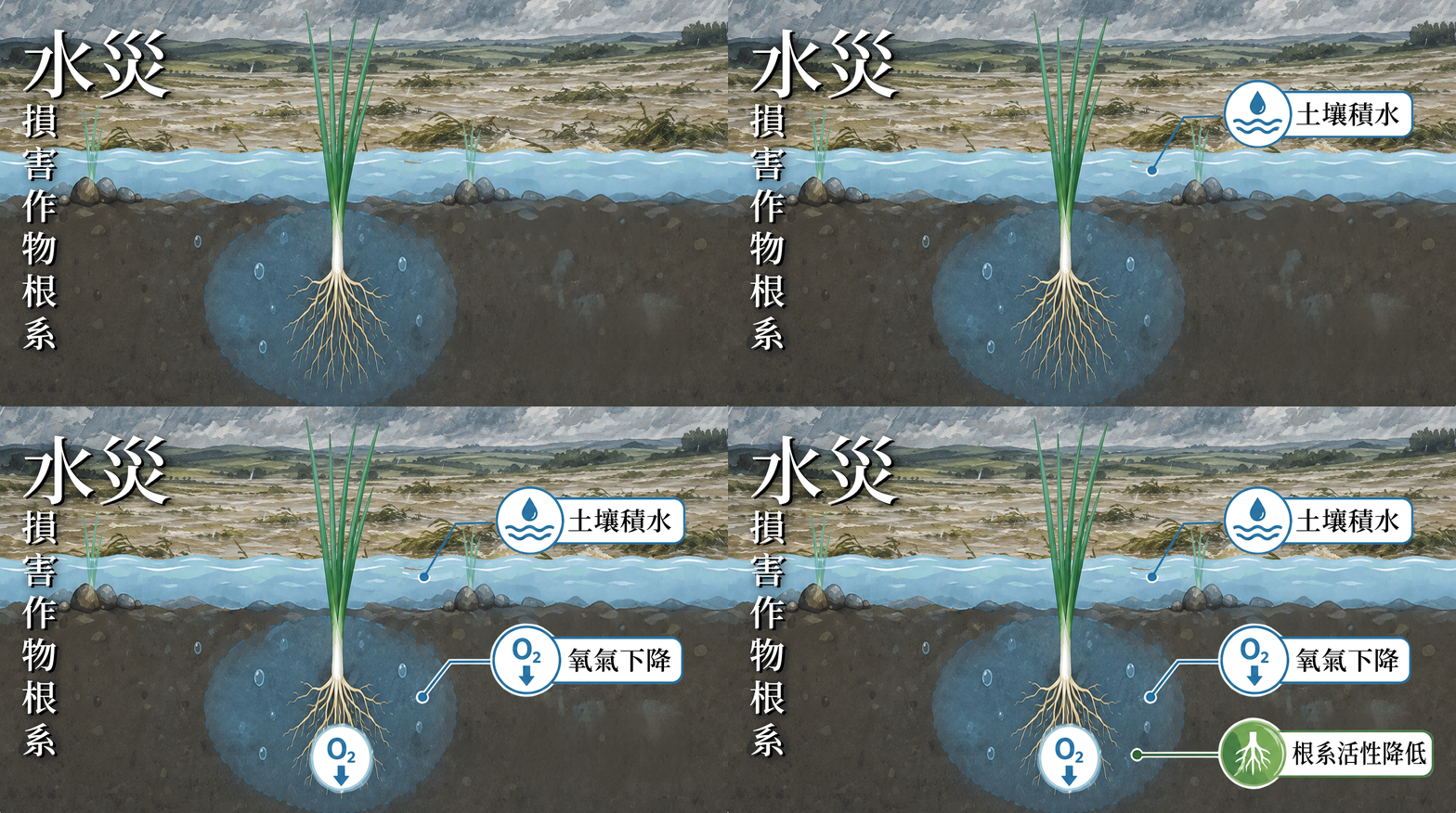
Under normal soil conditions, pore spaces contain both water and air.
Roots do more than absorb water and nutrients. They also need a continuous supply of oxygen to maintain normal cellular respiration and energy metabolism.
When heavy rainfall keeps soil saturated for an extended period, water replaces the air in soil pores and sharply restricts gas exchange between the root zone and the atmosphere.
Research shows that oxygen diffuses through water at only a tiny fraction of the rate at which it diffuses through air. As a result, prolonged waterlogging can quickly expose roots to low-oxygen or even oxygen-deprived conditions.
The real problem with oxygen deficiency is that it directly changes the way plants produce energy.
Under normal conditions, roots rely mainly on mitochondrial aerobic respiration to generate enough ATP to support root growth, ion uptake, cell membrane function, nutrient transport, and many other root processes.
When the root zone becomes oxygen deficient, aerobic respiration is restricted and plants must rely more heavily on glycolysis and fermentation.
These pathways can still generate some energy temporarily, which is why crops do not always die immediately.
The problem is that they are far less efficient than normal aerobic respiration.
As flooding continues, plants gradually enter an energy-deficient state.
Studies indicate that glycolysis and ethanol fermentation can temporarily compensate for energy shortages, but under prolonged flooding, lactate, ethanol, aldehydes, and other anaerobic metabolites may accumulate and eventually cause cellular injury or even death.
So a green onion that still looks green above ground does not necessarily have healthy roots below. In many cases, the damage starts in the root zone first.
Once Roots Are Damaged, the Whole Plant Is Affected
Roots are not simply responsible for “taking up water.”
They also support nutrient uptake, plant signaling, interactions with rhizosphere microorganisms, and the supply of resources needed for above-ground growth.
Once root activity declines because of oxygen deficiency, the above-ground parts of the plant are gradually affected as well.
Flooding is often associated with stomatal closure, reduced chlorophyll, leaf yellowing, and lower photosynthetic activity. As waterlogging continues, carbon assimilation and growth can decline further.
The plant may still have leaves above ground, while the roots below can no longer support it reliably.
That is one reason plants can be especially vulnerable after the water recedes.
Another Hidden Problem: Reactive Oxygen Species and Oxidative Stress
It may seem intuitive that reactive oxygen species should be less likely to accumulate under oxygen-deficient conditions.
In reality, plant responses are more complex.
Studies show that under flooding and low-oxygen conditions, plant cells may still accumulate reactive oxygen species (ROS), including superoxide radicals, hydrogen peroxide, and hydroxyl radicals.
At moderate levels, ROS are important signaling molecules involved in stress responses and regulation.
But when ROS production becomes excessive and the antioxidant system cannot remove them quickly enough, oxidative damage can occur.
Lipid peroxidation of cell membranes, protein damage, DNA oxidation, and impaired organelle function.
The ability to regulate ROS effectively is therefore an important part of flooding tolerance.
One feature commonly observed in more flood-tolerant plants is the ability to maintain higher activity of antioxidant enzymes such as SOD, CAT, POD, and APX during stress, helping keep ROS within a more manageable range.
What plants really need is not “zero ROS.”
Instead, they need to “maintain a balance between oxidation and antioxidant defense during stress.”
After the Water Recedes, Plants Must Go Through Another Metabolic Transition
When standing water drains away and soil is exposed to air again, oxygen begins to return to the root zone.
On the surface, this looks like good news.
But for the plant, it means that a metabolism adapted to low-oxygen conditions must switch back to normal aerobic metabolism.
This process is known as reoxygenation.
Research indicates that plants must continue regulating ROS and stabilizing photosynthesis and cellular metabolism during reoxygenation. The ability to manage this transition can directly affect whether a plant successfully recovers from flooding stress.
The environment may recover when the water recedes, but the plant itself may not have recovered yet.
Roots still need time to restore respiration.
Cell membranes must regain stability.
Water and nutrient transport must be re-established.
Photosynthesis must gradually return to normal.
So the key agricultural question is not simply:
“Did the crop survive?”
It is: “How quickly can it recover?”
If Intense Sunlight Returns Immediately After Flooding, Plant Stress May Increase Further
This is a common situation in Taiwanese agriculture.
Several days of continuous heavy rain.
Fields remain waterlogged for an extended period.
Then the weather suddenly clears and high temperatures and intense sunlight return immediately.
At this point, plants face a particularly difficult situation:
The shoots are suddenly exposed to strong light and high transpiration demand, while the roots may still be recovering.
Strong sunlight and heat increase leaf transpiration and metabolic demand, while roots affected by flooding may still have limited capacity for water uptake, nutrient transport, and energy supply.
Current research provides strong evidence for the relationships among flooding, oxygen deficiency, reoxygenation, and ROS. Direct research on the specific field scenario of immediate post-flood exposure to high heat and intense sunlight is still comparatively limited.
A more scientifically cautious interpretation is that immediate exposure to heat and intense sunlight after drainage may further increase the physiological burden on plants that have not yet fully recovered.
This also reflects a common field observation: some crops do not die while the field is still flooded, but begin to yellow, weaken, lodge, or decline rapidly several days after the water recedes.
This does not mean that drainage makes the situation worse. Rather, damage accumulated during the earlier root-zone stress may become more visible and more severe during the next stage.
Disease Pressure After Flooding Cannot Be Viewed Separately
Another issue farmers know very well is this:
Disease problems often appear after heavy rain.
This is not a coincidence.
Plant disease typically develops when three conditions occur together: a pathogen, a susceptible host, and an environment favorable for disease development.
Prolonged flooding can alter two of these conditions at the same time.
On one hand, high humidity, low oxygen, and waterlogged conditions may favor the survival or infection of certain pathogens.
On the other hand, plants weakened by oxygen deficiency, energy shortage, and oxidative stress may become more vulnerable to pathogens they could otherwise resist more effectively.
Research suggests that some plant pathogens can take advantage of high humidity, low-oxygen conditions, and weakened plant defenses. In this way, abiotic stress and disease are often not independent events, but interacting pressures that can amplify one another.
Management after heavy rainfall cannot focus only on drainage.
Root recovery and disease risk must also be considered.
How Can Beneficial Microorganisms Support Plants?
Microorganisms cannot prevent oxygen deficiency in flooded soil.
Nor can they make crops completely unaffected by extreme weather.
The more meaningful question is:
Can beneficial microorganisms help plants suffer less damage under the same flooding conditions and re-establish normal growth more quickly after the water recedes?
Current research points to several important mechanisms.
Support a Stronger Root System
Some plant growth-promoting microorganisms can influence root development through plant hormones and rhizosphere interactions.
For example, certain microorganisms can produce signaling compounds such as auxin, promoting lateral root formation and root elongation, increasing root surface area, and helping plants establish a more developed root system under normal growing conditions.
The significance of this is not simply that the plant “grows faster.”
The real value is whether the plant already has a stronger root foundation before stress arrives.
A healthier root system may leave the plant with more capacity to recover if part of the root system is damaged or loses function.
Help Plants Maintain Antioxidant Capacity
Plant growth-promoting microorganisms may also stimulate plant antioxidant systems.
Reviews of related studies suggest that some PGPR and mycorrhizal treatments can increase the activity of antioxidant enzymes such as SOD and CAT, helping plants reduce oxidative damage caused by ROS.
This can be especially important under flooding because plants must cope not only with oxygen deficiency, but also with oxidative stress during both the flooding and reoxygenation stages.
Microorganisms may not “stop ROS from forming,” but may help plants manage ROS more effectively.
Modulate Plant Hormonal Responses to Stress
During flooding, plants adjust multiple hormones, including ethylene, auxin, ABA, and JA.
Together, these signals influence root development, stomatal behavior, metabolic adjustment, changes in root architecture, and plant defense.
Ethylene is one of the particularly important signals involved in flooding responses.
One mechanism that has received considerable attention in microbial research on flooding tolerance is ACC deaminase.
ACC is an important precursor in plant ethylene synthesis. Some beneficial microorganisms possess ACC deaminase, which can break down ACC and thereby modulate the negative effects associated with excessive ethylene accumulation under flooding conditions.
Studies have shown that microorganisms with this capability can improve the tolerance of certain crops under flooding or waterlogging conditions.
Important scientific note:
It cannot currently be assumed that the strains in RichFarm Booster work specifically through ACC deaminase.
Whether the actual strains possess this enzyme activity still requires direct testing. ACC deaminase should therefore be viewed as one potential mechanism worth further study and validation by Rolling Greens.
Support Nutrient Acquisition and Rhizosphere Function During Stress
Beneficial microorganisms may also improve nutrient acquisition through mechanisms such as phosphorus solubilization, siderophore production, hyphal extension, and modification of root architecture.
This can be particularly important during recovery.
After water recedes, plants need substantial energy and nutritional resources to regrow roots and leaves and restore photosynthesis.
Microorganisms with real agricultural value may not simply make plants “grow faster under normal conditions.” More importantly, they may help plants restart growth more effectively after stress.
Microorganisms May Also Help Plants Cope With Disease Pressure After Flooding
Another important area of research is the role of beneficial microorganisms under combined “stress + pathogen” pressure.
Some PGPM may not only support plant growth, but may also reduce opportunities for pathogen establishment and infection through competition for nutrients and space, direct antagonism, and induced systemic resistance (ISR).
As a result, plant-microbe research is beginning to move beyond a single question:
“Can microorganisms help plants tolerate flooding?”
The broader question is becoming: “Can microorganisms improve overall resilience to both flooding and subsequent pathogen pressure?”
For real-world agriculture, this is even more important.
Farmers rarely face only one stress at a time.
Real field conditions often combine:
heavy rain, waterlogging, oxygen deficiency, high humidity, heat, intense sunlight, and pathogens.
What Matters Is Not Just Survival, but Recovery Speed
When discussing stress tolerance, it is easy to reduce the question to one simple indicator: did the crop die or not?
From a production perspective, however, that standard is too low.
Even if a crop survives, ten days or two weeks of growth stagnation—or a failure to return to normal yield potential—can still represent a major loss for growers.
The Ability to Recover After Stress
Researchers increasingly evaluate flooding tolerance using indicators such as root vitality, recovery of photosynthesis, antioxidant capacity, compensatory growth, and final yield recovery.
Some studies even use the term “post-stress compensatory growth” to describe a plant’s ability to resume growth after flooding ends.
Studies of flood-tolerant plants also show that truly resilient plants do more than simply survive flooding—they recover faster and more strongly after the water recedes.
For growers, the most meaningful question may be: after the same flooding event, which crop recovers faster?
What the Green Onion Field Case Suggests About RichFarm Booster
In a Rolling Greens green onion field application, the crop experienced prolonged heavy rainfall and waterlogging.
Based on field observations, plants treated with RichFarm Booster not only showed stronger growth beforehand, but also returned to normal growth more quickly after prolonged flooding once the water receded.
More notably, the plants remained relatively healthy under the high temperatures and intense sunlight that followed, and no obvious widespread disease or pest problems were observed.
At this stage, a field case alone is not enough to conclude that:
RichFarm Booster produces these results through one specific physiological mechanism.
However, current research on beneficial microorganisms and flooding stress provides a scientifically reasonable basis for further investigation of these observations.
The result may not come from a single effect, but from the combined contribution of multiple factors:
• A stronger root system
• A more developed rhizosphere microbial environment
• Plant hormone regulation
• Antioxidant capacity
• Nutrient acquisition efficiency
• The balance between plant defense and pathogen pressure
What RichFarm Booster Can Realistically Contribute Under Flooding Stress
At Rolling Greens, we do not position RichFarm Booster as:
“A miracle product that makes crops immune to flooding.”
No biological product can replace proper drainage or eliminate extreme weather.
A more appropriate positioning is:
Build healthier roots and rhizosphere conditions before stress occurs, helping plants maintain stronger resilience during flooding and the recovery period that follows.
01|Build a Stronger Root Foundation Before Stress Arrives
Healthy, active roots may leave plants with greater recovery capacity if part of the root system is later damaged.
02|Help Plants Cope With Root-Zone Hypoxia and Metabolic Stress During Flooding
Beneficial microorganisms may support plant function during stress through plant signaling, nutrient utilization, and antioxidant-related mechanisms.
03|Support Faster Re-establishment of Normal Growth After the Water Recedes
The key question is not simply whether the crop survives, but how quickly it can resume root growth, leaf growth, and normal development.
04|Reduce the Secondary Impact of Combined Stress After Flooding
When intense sunlight, high temperatures, and high transpiration demand return immediately after flooding, plants must quickly restore the water and energy balance between roots and shoots. One value of microbial management is helping plants enter this stage with a stronger physiological foundation.
05|Support a More Stable Rhizosphere Environment and Reduce the Risk of Disease Pressure
Beneficial microorganisms may help reduce opportunities for certain pathogens to establish rapidly after stress through rhizosphere competition, induced plant defenses, and support for overall plant health.
It is important to emphasize:
RichFarm Booster is not a fungicide and cannot guarantee that crops will remain disease-free.
Its role is closer to supporting healthier roots and plant condition, thereby reducing the likelihood that plants become highly susceptible hosts after environmental stress.

Drainage Saves the Field. Rhizosphere Resilience Helps Save the Crop.
Extreme rainfall is not going away.
The future of agriculture is not about dealing with only one type of stress, whether drought or flooding.
Flooding today, drainage tomorrow, intense sunlight the next day, followed by disease pressure.
Plants must continuously adjust their physiological state within a very short period of time.
That is why stress resilience should not be understood as “never being damaged.”
This is also the management philosophy Rolling Greens hopes to support through RichFarm Booster.
The goal is not to wait until flooding occurs and then start trying to rescue the crop.
It is to build healthier roots and a stronger rhizosphere microbial environment during normal cultivation.
Because when the real storm arrives, a crop’s ability to endure it may already have been shaped long before the rain began.
The value of RichFarm Booster is not only helping crops perform better when conditions are favorable.
What we hope to support is this:
when conditions become difficult, crops still have the capacity to recover and stand back up.